
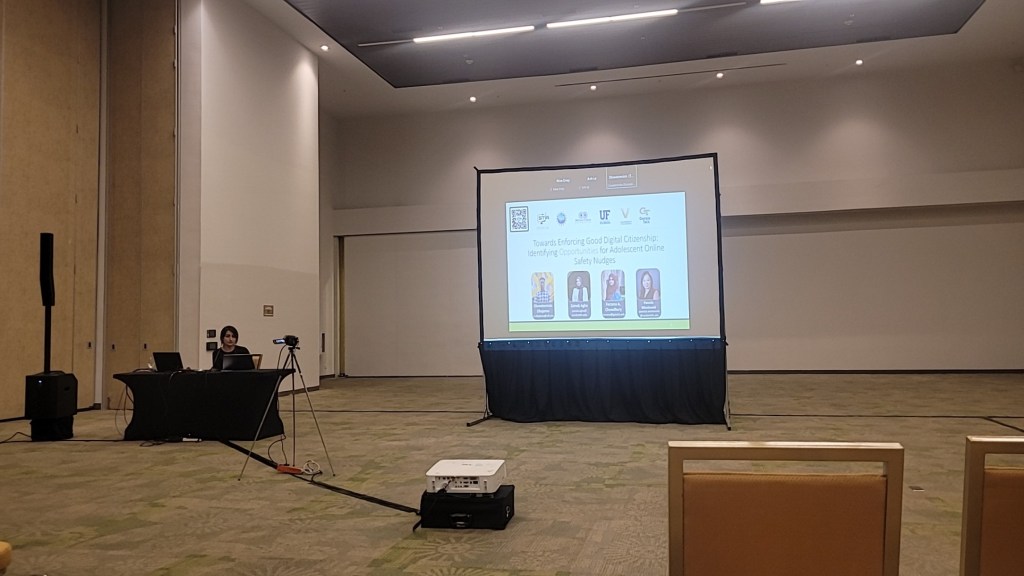
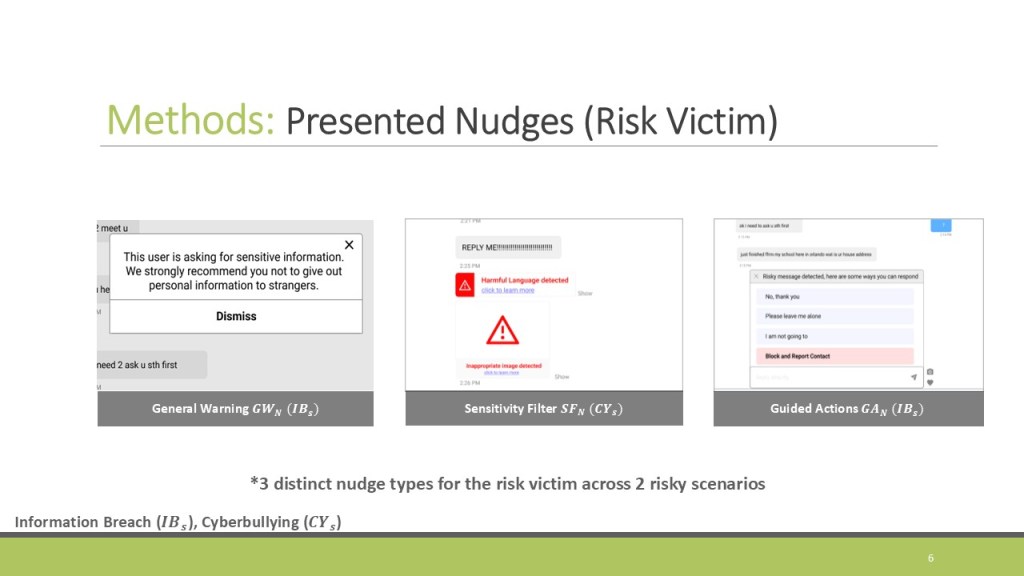
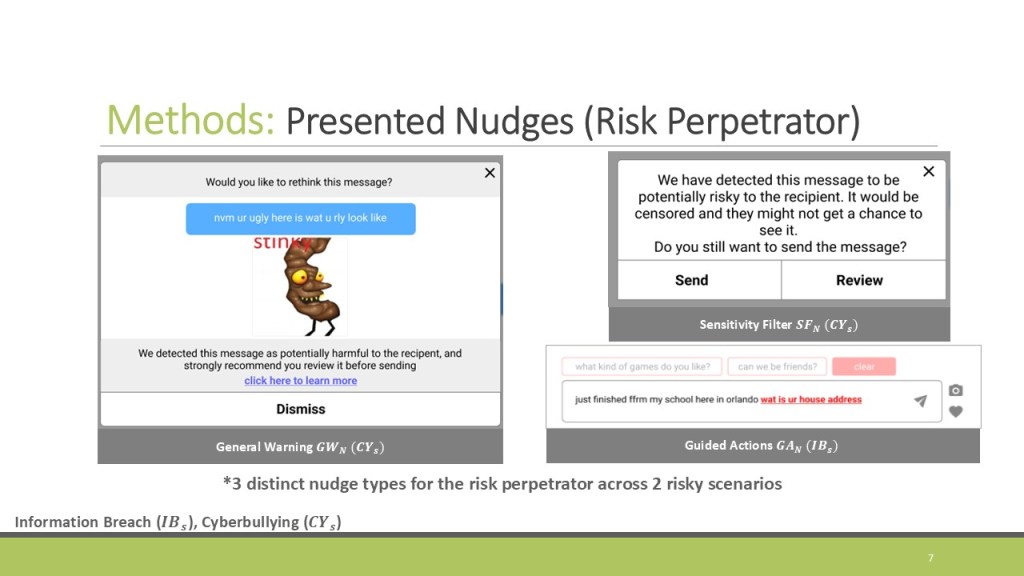
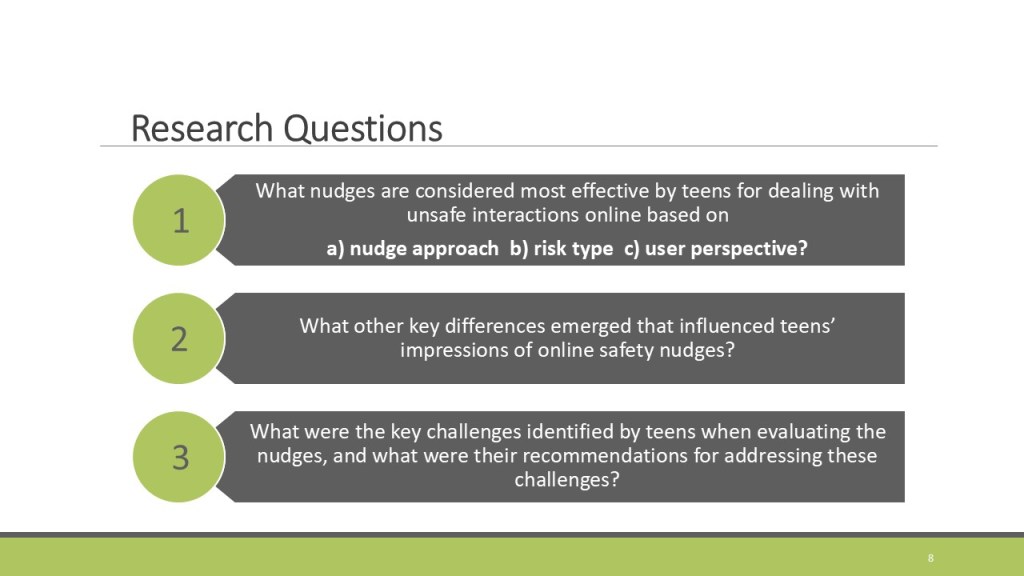
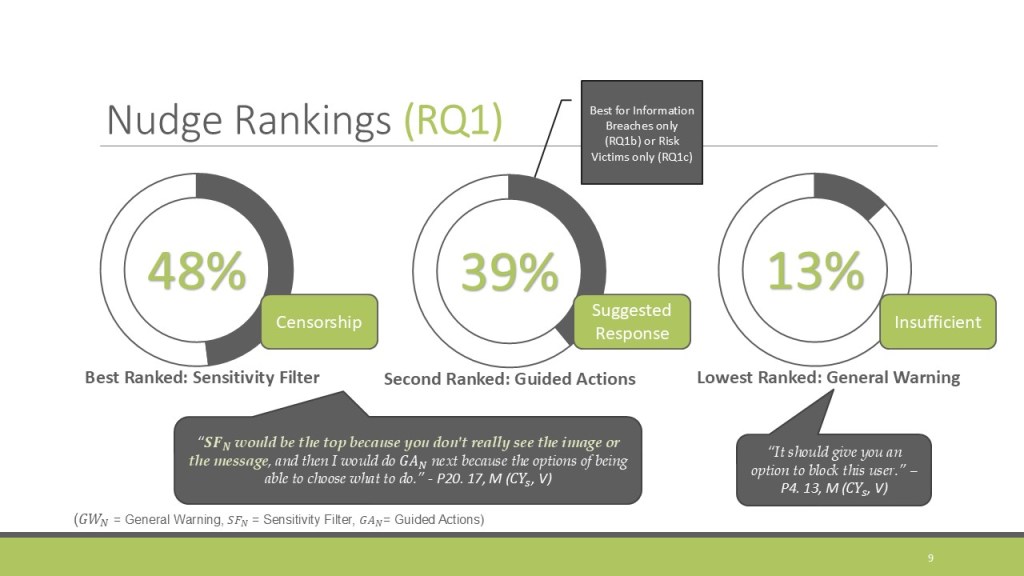
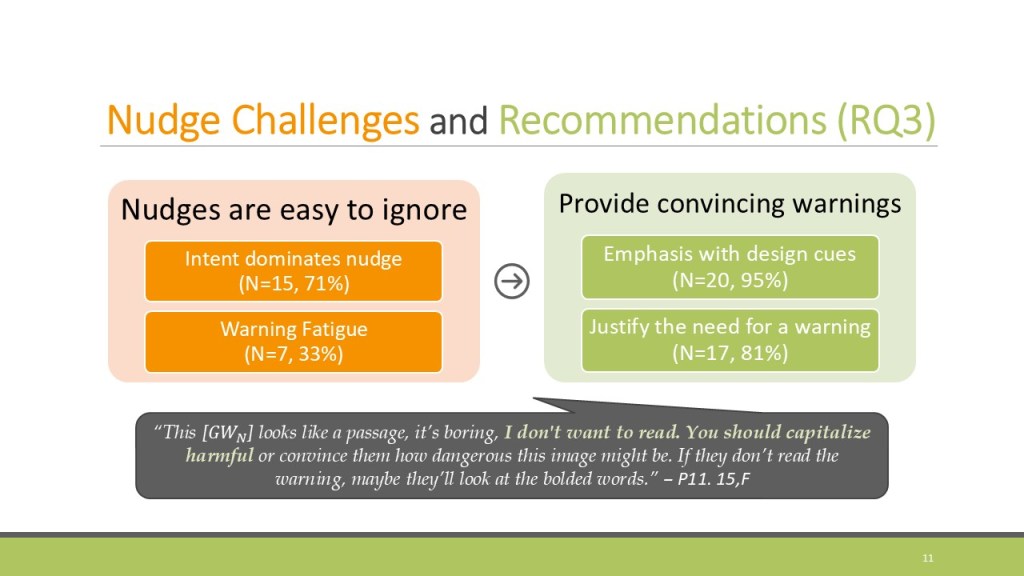
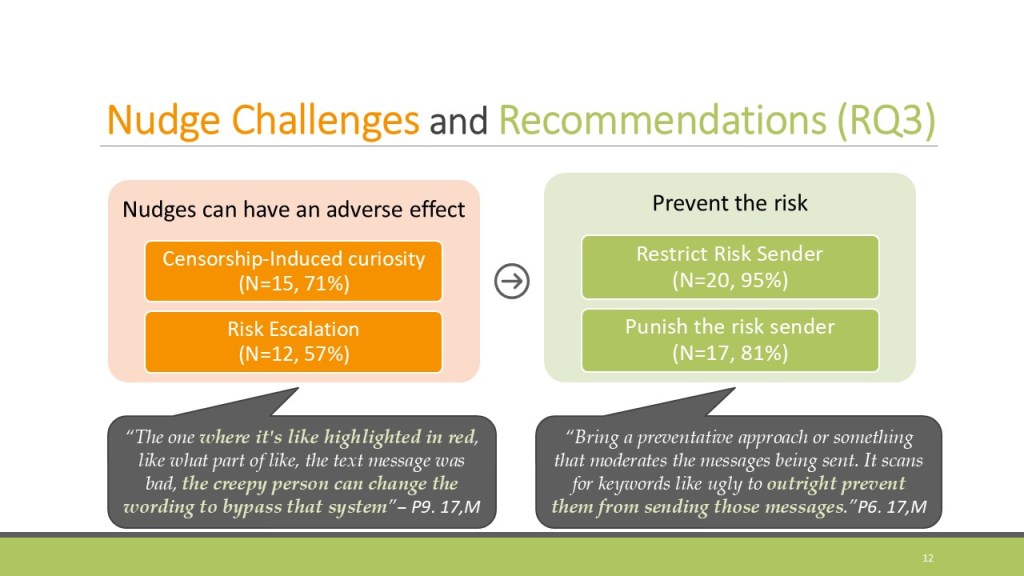
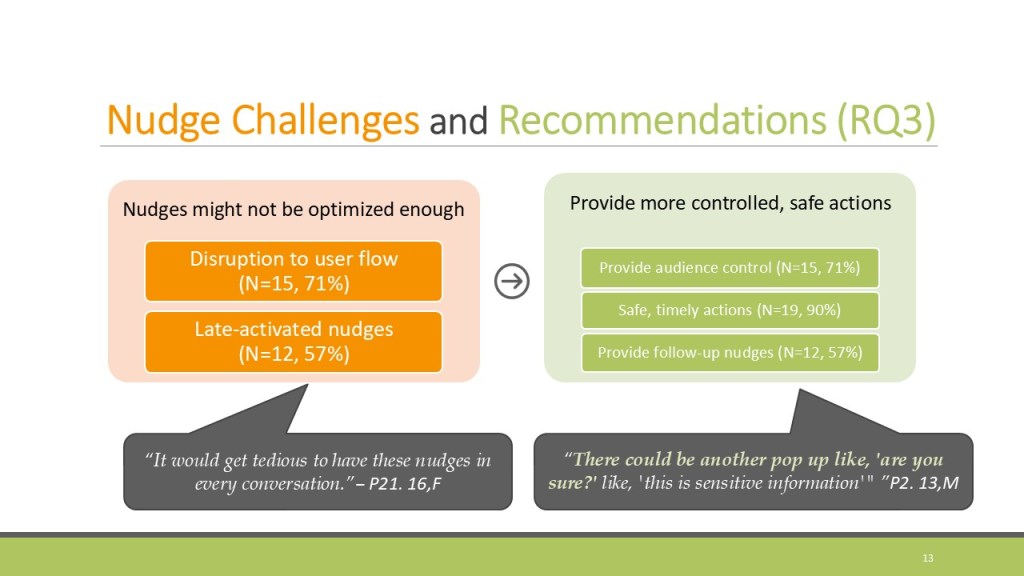
This research project titled, “Towards Enforcing Good Digital Citizenship: Identifying Opportunities for Adolescent Online Safety Nudges” was presented (virtually) at CSCW24. It is part of my Teens Only Safety work with Dr. Wisnewski and the STIR Lab. In this study, we evaluated teen-designed online safety nudges with 21 US-based teens, aiming to provide recommendations to social media companies for creating a safer online environment for adolescents. We discovered that teens want online safety features to do more than just warn them about a risk, as warnings alone are not sufficient. They want these features to offer actionable solutions to the risk. Furthermore, teens identified potential challenges and new recommendations for these nudges, as well as contextual differences that may influence their effectiveness.
The slides are shown below, and I encourage you to check out the full paper. It covers a lot of nuance in our research design and findings. I am thankful for my co-authors Pam, Zainab, and Farzana, as well as the STIR Lab for making this research a success.

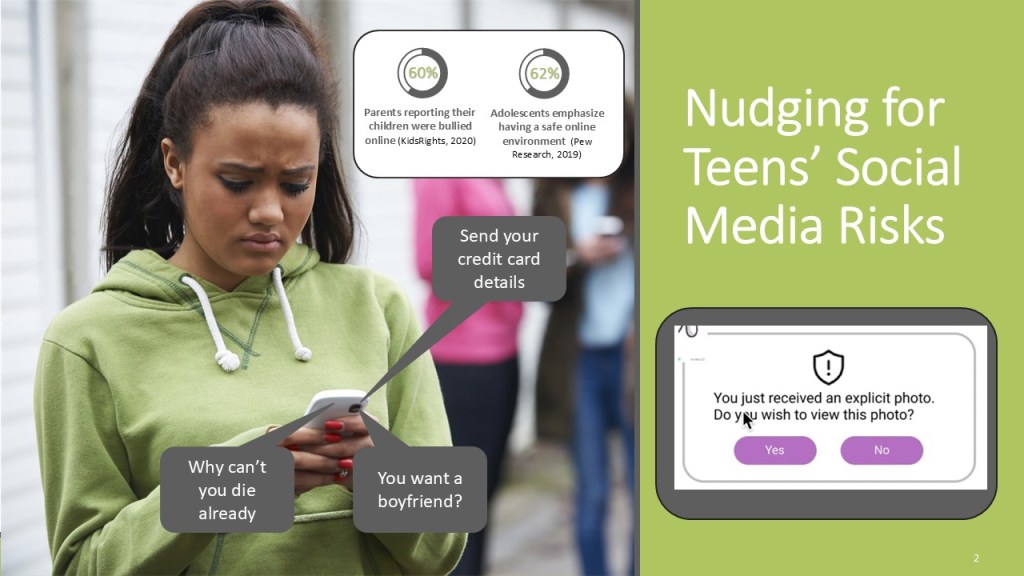
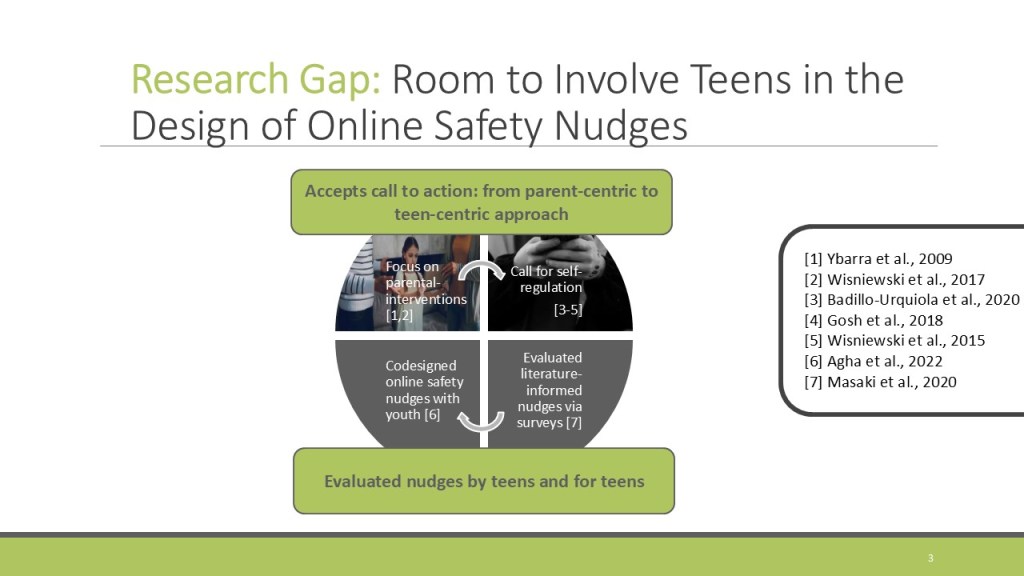
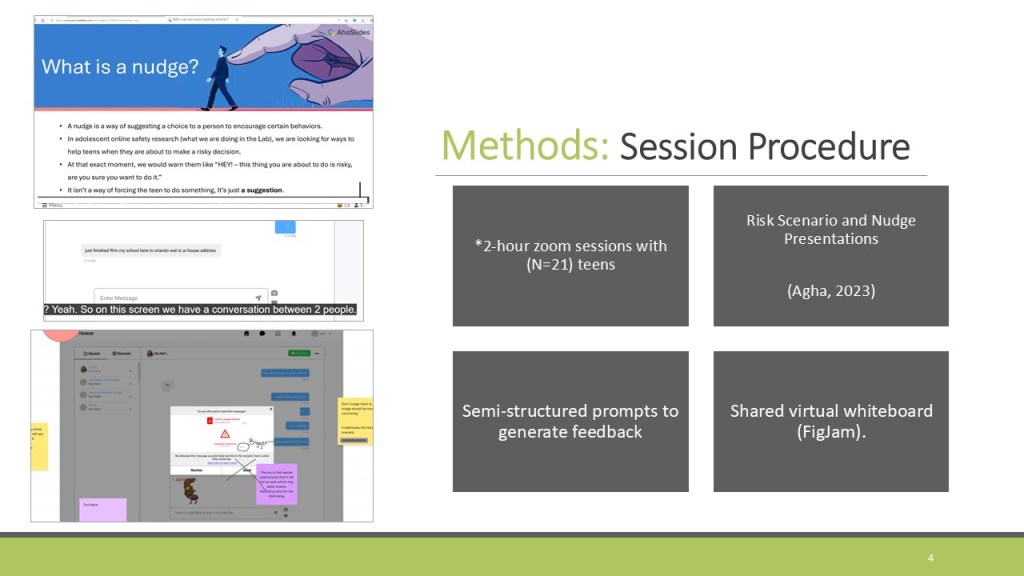


Audience Question
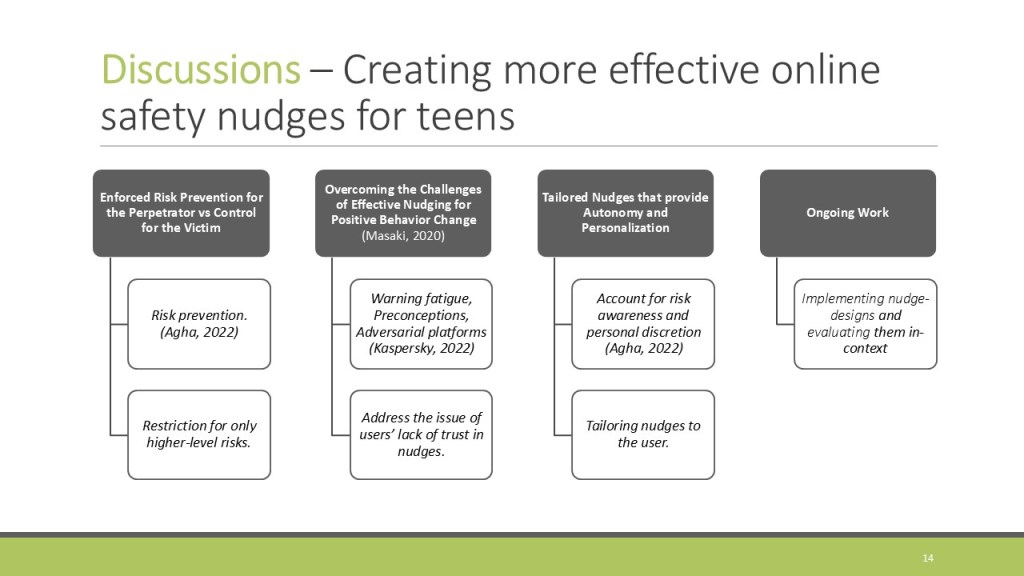
- Considering the differences you mentioned [which alter the effectiveness of a nudge], how can we design the perfect “nudge” for teens? – This is an excellent question, and it is something we touch on in the full paper. In this research, we find out that there are just so many factors that affect how nudges work, which might make it not feasible to design a perfect nudge. Some possible approaches that might help manage this include: redundant testing of these nudges, profiling both the victim and perpetrator to provide targeted nudges and providing customization options for the user to determine how much or how often they want to be nudged. I expect this last point especially, to be important in solving the warning fatigue issue mentioned earlier in the presentation.
 Oluwatomisin Obajemu